From Battery Ownership to Battery Lifecycle: Building a Circular Economy for Electric Vehicles

GoPlug Smart
September 28, 2026
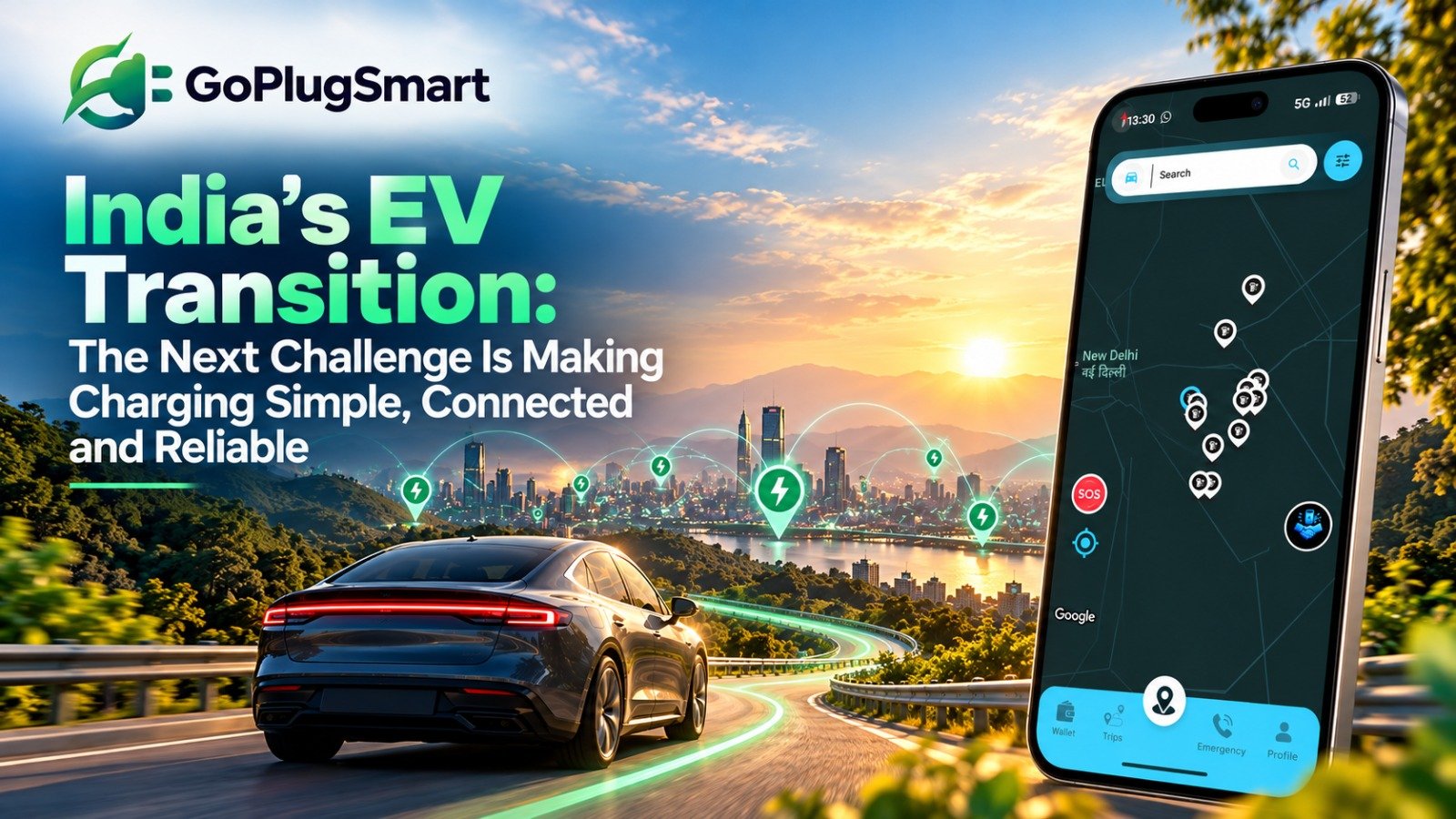
India’s electric mobility journey is moving quickly.
EV 2W and 3W are becoming increasingly common in personal and commercial mobility, while EV 4-W are gradually becoming more visible among private users, businesses and fleet operators.
According to the Government of India’s PM E-DRIVE dashboard, India has recorded approximately 45.8 lakh electric 2-wheeler registrations and more than 3.3 lakh electric 3-wheeler registrations in the data currently reflected on the dashboard. PM E-DRIVE Dashboard
These numbers clearly show that EV adoption is no longer limited to early adopters.
But as more EVs come onto Indian roads, another question becomes increasingly important:
Is the charging ecosystem ready for the next phase of EV growth?
The EV Journey Does Not End With Buying the Vehicle, Buying an EV is only the beginning.
The everyday charging experience has a major role in determining whether an EV is practical for its owner.
The question is therefore changing from: “Are there enough EVs?” to “Can users charge those EVs easily wherever and whenever they need to?”
India’s Charging Infrastructure Is Growing. There has already been significant progress in charging infrastructure.
The Ministry of Power reported 23,749 public charging stations installed by various public and private entities during the four years leading up to November 2024. Ministry of Power — Public Charging Stations Data. Government initiatives are also supporting the expansion of charging infrastructure alongside EV adoption.
But the next challenge is not simply installing more charging points. It is making the growing infrastructure accessible, visible, reliable and connected.
One of the interesting aspects of India’s EV market is that there is no single charging requirement.
Range Anxiety Is Also an Information Problem
Range anxiety is often described as a concern about battery range.But there is another side to it: uncertainty.
A user may have sufficient battery range but still feel uncomfortable if they do not know where the next reliable charger is. Imagine an EV 4-W user travelling from Delhi to Jaipur, an EV 3-W working throughout the day, or a delivery rider completing multiple trips.
The confidence to continue the journey increases when the user knows:
This is why solving range anxiety is not only about improving battery technology. It is also about improving the charging experience.
India’s charging ecosystem includes multiple CPOs, eMobility Service Providers, fleet operators, vehicle manufacturers and technology platforms.
If every network operates as a separate ecosystem, the user experience can become complicated. Interoperability can help change this. Standards such as OCPI allow different players in the charging ecosystem to communicate and exchange relevant charging information.For the consumer, the result should ideally be simple:
Find → Check → Charge → Pay → Continue.
The technology behind this process can be complex. The user experience should not be.
The Need for a More Unified Digital Experience
NITI Aayog’s recent work on EV mobility highlights several challenges around charging infrastructure, including uneven availability, range anxiety and the inconvenience created when users need different applications or systems to access charging services. Its recommendations also discuss the importance of a more integrated digital experience for locating, booking and paying for charging services.This highlights an important point:
Physical charging infrastructure and digital infrastructure need to grow together.
A charger that exists but cannot be easily discovered, accessed or paid for does not provide the same value as a charger that is part of a connected ecosystem.
From Charging Infrastructure to Charging Experience
The next phase of India’s EV ecosystem should therefore focus on the complete charging journey.It should bring together:
Infrastructure + Interoperability + Payments + Data + Support + User Experience
The requirements can be different, but need are moreover the same: Reliable and accessible charging.
What Will Drive the Next Phase of EV Adoption?
EV adoption will not depend on a single factor; Battery technology will continue to improve; Vehicle prices will continue to evolve; Government policies will continue to influence adoption.
But charging infrastructure will remain one of the foundations of the ecosystem.
The industry therefore needs continued collaboration between:
The goal should be to make charging more available, more discoverable, more interoperable and easier to use.
The Road Ahead
India has already shown that consumers and businesses are willing to move towards electric mobility.
The opportunity now is to make that transition easier.Future EV user should not need to understand which company owns a charger, which network operates it or which technology sits behind it.
They should simply be able to find a charger, charge their vehicle, make a payment and continue their journey.
Whether it is a delivery rider on an EV 2-W a commercial 3-W driver, a family travelling in an EV 4-W or a fleet operator managing hundreds of vehicles, confidence in charging will be an important part of confidence in EVs. The EV transition is therefore not only about putting more electric vehicles on the road. It is about building an ecosystem that makes those vehicles genuinely practical for everyday life.
(+62)81 238 1991
GoPlugSmart is a smart EV charging station locator and trip-planning solution that helps EV owners find nearby charging stations, plan efficient routes, and travel with confidence. It is designed to reduce range anxiety, GoPlugSmart makes electric journeys seamless, reliable, and sustainable.
Subscribe to our newsletter to receive updates on EV charging technology, new installations, sustainability insights, and company news.
Copyright © 2026 | GoPlugSmart
WhatsApp us
 By Logixweb