Evolution of Electric Vehicles: From Experiments to the Future of Mobility


GoPlug Smart
April 14, 2026
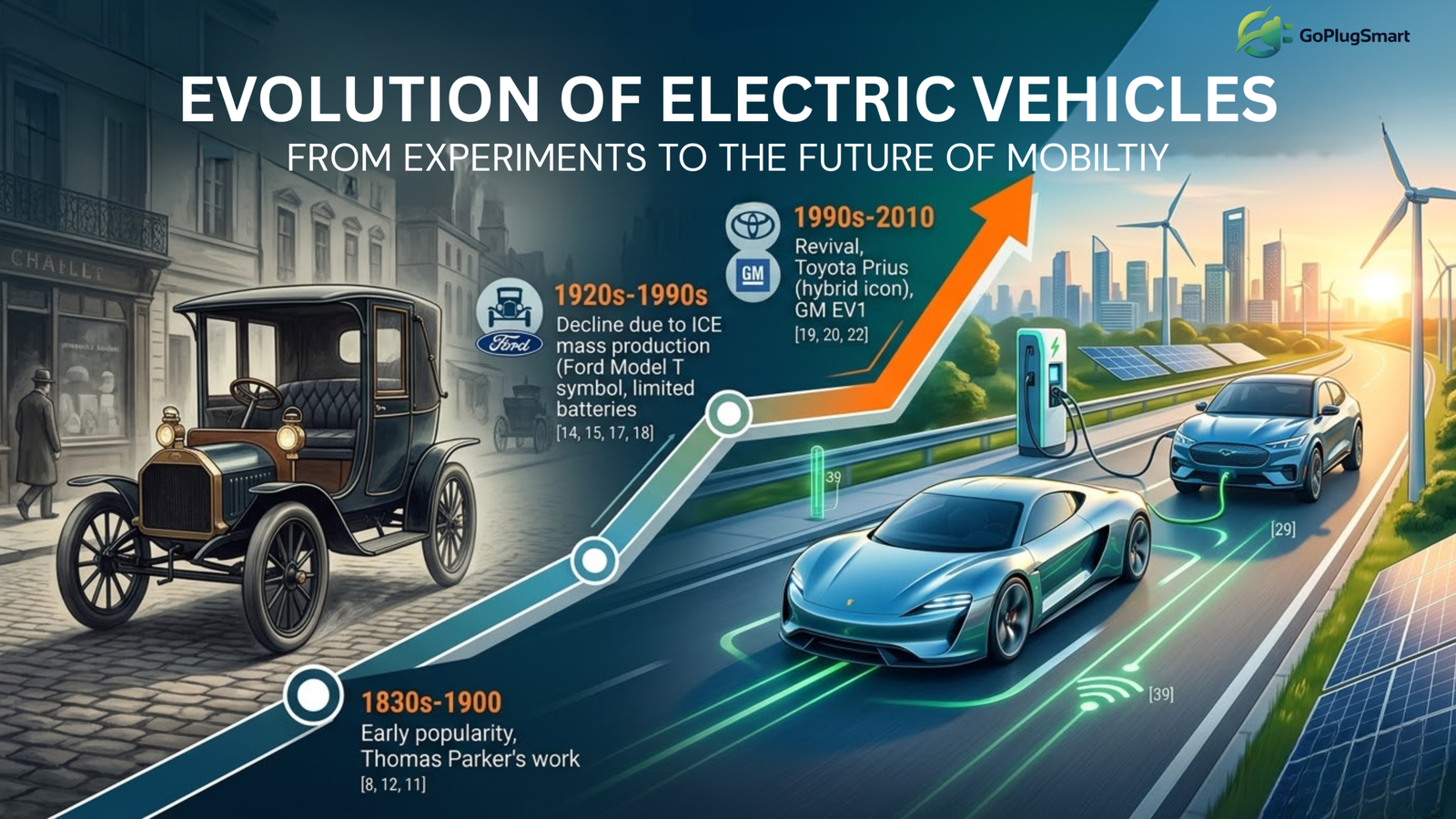
Electric vehicles (EVs) are no longer a futuristic concept—they are rapidly becoming the backbone of modern transportation. With rising fuel costs, environmental concerns, and progressions in technology, EVs are reshaping how we move. But this transformation didn’t happen overnight. The journey of electric vehicles spans over a century, filled with innovation, setbacks, and revival. The concept of electric mobility dates back to the early 19th century. Around the 1830s, inventors began experimenting with battery-powered vehicles. By the late 1800s, electric cars were actually more popular than gasoline-powered ones.
Key Highlights:
The rise of internal combustion engine (ICE) vehicles led to a sharp decline in EV popularity. Reasons for Decline:

Revival of Electric Vehicles (1990s – 2010) Environmental awareness and fuel crises sparked renewed interest in cleaner transportation. Important Developments:
This era laid the foundation for the modern EV revolution. The real breakthrough came in the last decade with advancements in battery technology and strong market players entering the industry.
Key Drivers:
Impact Today:
The Future of Electric Vehicles
The evolution of EVs is far from over. The future promises even more innovation.
What to Expect:
EVs are set to play a crucial role in reducing carbon emissions and combating climate change.
Conclusion
The evolution of electric vehicles is a story of resilience and innovation. From early experiments in the 1800s to today’s high-tech machines, EVs have come a long way. As technology continues to advance and global demand for sustainable solutions grows, electric vehicles are not just an alternative—they are the future of mobility.
(+62)81 238 1991

GoPlugSmart is a smart EV charging station locator and trip-planning solution that helps EV owners find nearby charging stations, plan efficient routes, and travel with confidence. It is designed to reduce range anxiety, GoPlugSmart makes electric journeys seamless, reliable, and sustainable.
Subscribe to our newsletter to receive updates on EV charging technology, new installations, sustainability insights, and company news.
Copyright © 2026 | GoPlugSmart
WhatsApp us
 By Logixweb